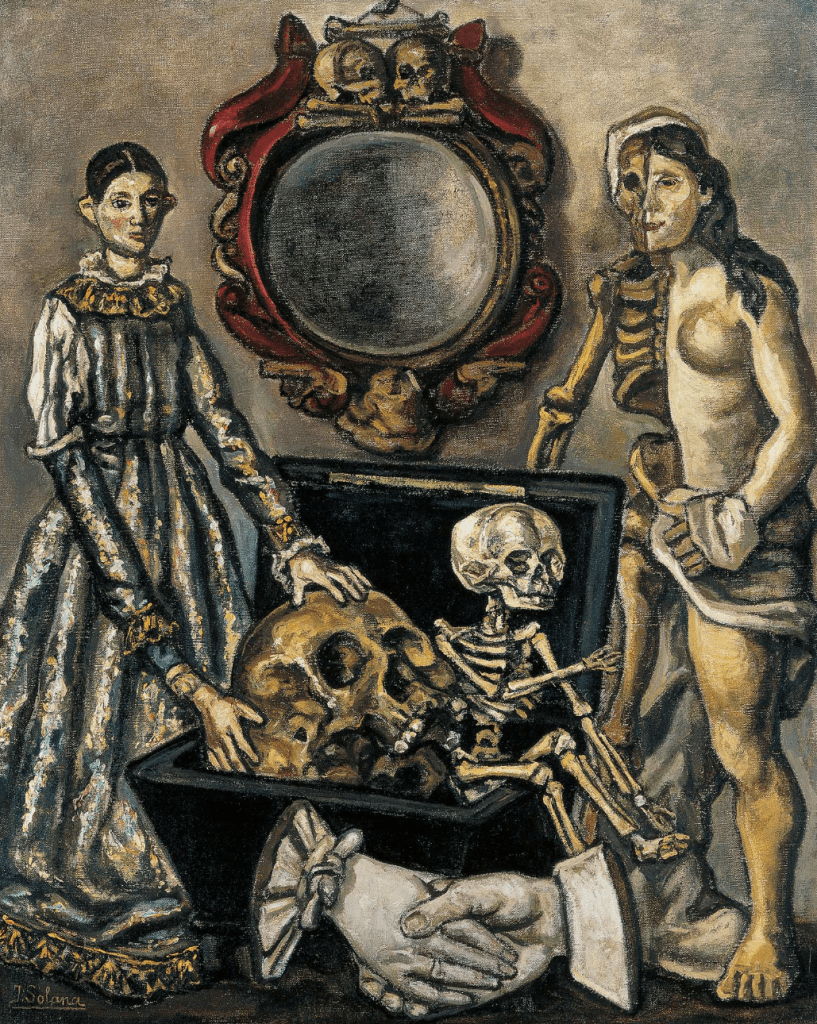
THE MIRROR OF DEATH
Hermeneutical Reflections on the Afterlife
Part Two*
Kristof K.P. Vanhoutte
* Participation in Part 1 is not required for the full understanding of this series of seminars.
🗓 FIVE SATURDAYS: April 11, 18, 25; May 2, 9, 2026
⏰ 10 AM-12 PM Eastern US Time. See time zone converter if you’re in a different location to make sure you get the time right.
🔗 A Zoom link will be provided on registration.
💰Four options (registration at bottom of this page.):
(i) $100 for non-members (become a member).
(ii) $80 for members.
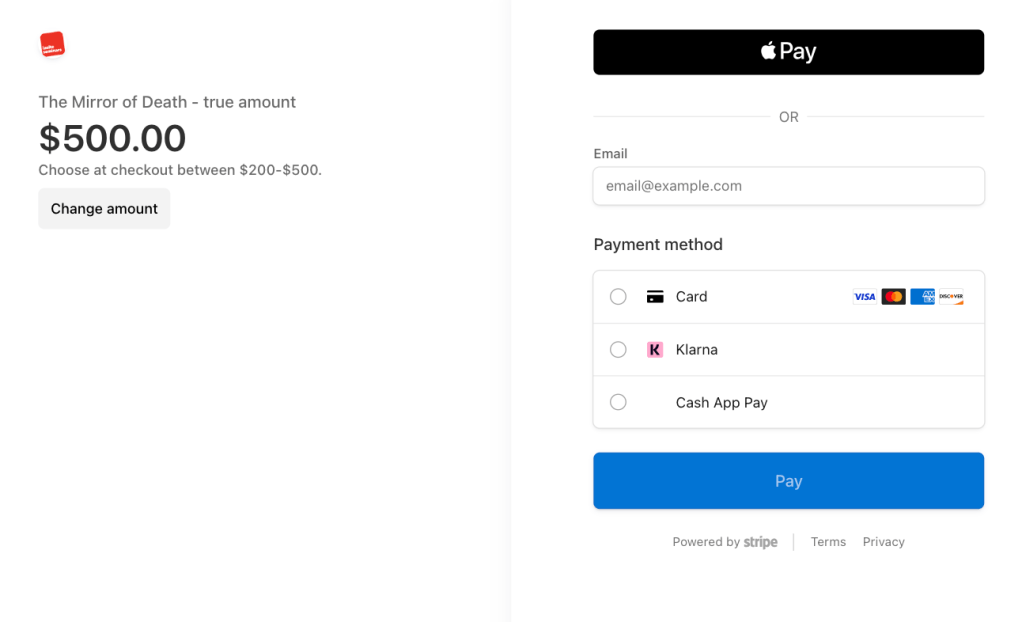
(iii) Up to $500, true cost (actual minimal cost to IS and the facilitator if ten people sign up.) Rogue Scholars in the Ruins. Here In faith that out of the ruins will come ideas and practices, both personal and social, that will help us to heal our minds and bodies, care for our families, and participate with grace and power in the “struggle which is ours against the powers and principalities, against the rulers of this world of darkness and the spirits of evil in high places” as the great prayer to St. Michael goes. (Read more.)
(vi) Solidarity. We are happy to make our offerings available at reduced cost if you can not otherwise join. If you would like to request this option, please email us at inciteseminarsphila@gmail.com with the following information: (1) your current country of residence; (2) reason for requesting this option; (3) amount you can pay: $20, $40, $60 (we will then send you the payment link).
COURSE DESCRIPTION
What can Heaven, Hell, Purgatory, and the two Limbos tell us about the human condition, modern politics, or capitalist economies? What do they unveil about interpersonal relations, the temporalities of life, medicalization, systems of incarceration, wokism, and the pervasive experience of crisis? This series of seminars intends to demonstrate how the notion of an afterlife, once central to theological and existential discourse but now largely reduced to a simplistic dichotomy framed in
terms of psychological consolation, offers a invigoratingly new and critical perspective of a wide variety of contemporary phenomena is unleashed when reading them through the lens of the regions of the beyond.
The afterlife is currently monopolized in a stranglehold of scientism and physicalism in academia. It’s time that the humanities catch up with the sciences with respect to issues surrounding the afterlife. Philosophy is uniquely positioned to undertake this task; not merely because, since
antiquity, it has been considered as a learning how to die, but, more significantly, because the philosophical tradition of hermeneutics offers unique tools for understanding how the afterlife can deepen our grasp not only of philosophical inquiry – on how to philosophize – but of life itself. While these practices were much more central to the philosophical enterprise of the past, they have not vanished in recent decades. On the contrary, a diverse range of philosophers and cultural critics have
deliberately drawn on the motifs of the afterlife to enrich and intensify their critiques of contemporary society. And this is not a coincidence, but a purposeful choice to give greater clarity to their critiques of certain societal dynamics. Jean-Paul Sartre’s assertion that ‘Hell is other people’,
Giorgio Agamben’s reading of the dangerous derives of democracy as infernal death camps, Wolfgang Streeck’s analogy between capitalism and Limbo, and Bernard Williams’ bleak assessment of the boredom of monotonous paradisiacal repetitiveness, all represent contemporary examples of. what can be identified as hermeneutical reflections of the afterlife.
In continuation with the first series of seminars (the participation in which is not required for the full understanding of this series of seminars), The Mirror of Death II, offers a unique view of the
hermeneutical capacities of the afterlife. It is proposed as an intellectual Baedeker of the afterlife – a guide through the conceptual landscapes that have long structured reflections on death and what
lies beyond. Through a critical engagement with figures such as Dante, Plato, Cicero, Montaigne, Sartre, Camus, Illich, Foucault, Agamben, Streeck, Rosa, and many others, we will explore the hermeneutical appropriation by these scholars of the various regions of the afterlife.
Abbreviated schedule
Session I: Introduction; Hell
Session II: Heaven
Session III: Purgatory
Session IV: Limbo of the Fathers
Session V: Limbo of the Children; Conclusion
Facilitator: Kristof K.P. Vanhoutte is a philosopher and writer. He has almost two decades of experience in teaching and research in numerous higher education settings: Edinburgh, Paris, Rome, and Bloemfontein (South-Africa) – where he still is a Research Fellow. He is the author of The Mirror of Death: Hermeneutical Reflections of the Realms in the Afterlife (Rowman & Littlefield, 2024) and Limbo Reapplied. On Living in Perennial Crisis and the Immanent Afterlife (Palgrave Macmillan, 2018); and co-editor of Purgatory: Philosophical Dimensions (Palgrave Macmillan, 2017).
REGISTRATION
Non-member (become a member)
Member
True cost (choose between $200 & $500 at checkout)
 Incite Seminars