
with Hannes Schumacher
📅 5 SATURDAYS, weekly, beginning May 23, 2026.
⏰ 1-3 PM Eastern US Time. See time zone converter if you’re in a different location to make sure you get the time right.
🔗 A Zoom link will be available after you register.
💰Three options (registration at bottom of this page.):
(i) $100 for non-members (become a member).
(ii) $80 for members.
(iii) Solidarity. We are happy to make our offerings available at reduced or no-cost if you can not otherwise join. If you would like to request this option, please email us at inciteseminarsphila@gmail.com with the following information: (1) your current country of residence; (2) reason for requesting this option; (3) amount you can pay: $30, $40, $50 or more (we will send you the payment link); (4) if you are requesting no-cost, are you reasonably certain that you will attend the entire session(s)?
COURSE DESCRIPTION
Slowly crystallizing throughout the 20th century and popularized in the 1980s, chaos theory is a loosely defined set of transdisciplinary scientific research that cuts through virtually every branch of disciplinary sciences, and even the humanities: for the butterfly effect applies not only to tornadoes but also to the stock exchange, and self-organization is not limited to ants and termite architecture (termite mounds!), but turns out to be a crucial element in revolutionary movements; bifurcation does occur in trees, but also in decisions humans take, and vast complexity takes shape in migrating populations, but no less in the human brain. In short, chaos theory turns out to be so universal that we might be in the making of an entirely “new science,” as some authors claim, or at least of a new paradigm beyond reductionism, calling for a new metaphysics.
But in talking this way, are we not confusing chaos theory with cybernetics, yet another field of transdisciplinary research that originated in the 1940s and as well functions with feedback loops? … A total system of control that Heidegger had warned against?
We can never know for sure. In this seminar, we will treat chaos theory as the flipside of cybernetics, arguing for unpredictability against control, for freedom against determinism. For no matter how “adaptive” cybernetic systems may appear to capture each and every step we take, chaos is essentially ungraspable and always one step further than the system.
COURSE MATERIALS
Since the material on chaos theory is vast and at times not easy to digest, we will focus on some key texts that initially gave shape to the wicked world of chaos theory. While chaos theory is a holistic set of co-dependent concepts which cannot be analyzed in isolation, each session will zoom in on one of these concepts while maintaining its relations to the whole.
PDFs of all the readings will be provided upon registration. No prior knowledge is required.
SESSIONS
- From Reductionism to Complexity
- The Butterfly Effect
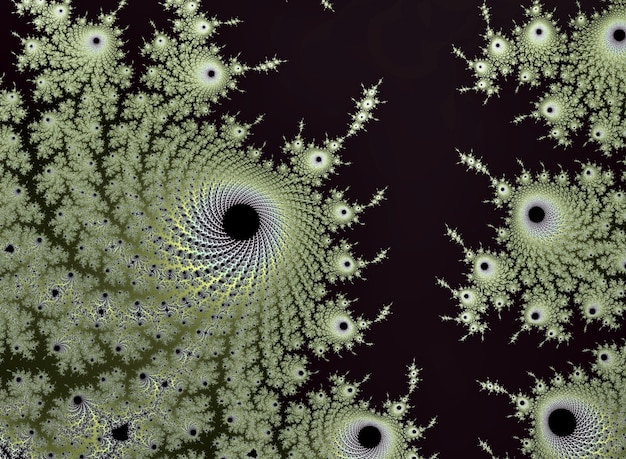
- Fractal Geometry and the Mandelbrot Set
- The Arrow of Time
- Self-Organization
READINGS
- From Reductionism to Complexity
– James Gleick, Chaos: Making a New Science, “Prologue” (1987) - The Butterfly Effect
– James Gleick, Chaos: Making a New Science, “The Butterfly Effect” (1987)
– Edward N. Lorenz, “Does the Flap of a Butterfly’s wings in Brazil Set Off a Tornado in Texas?” (1972) - Fractal Geometry and the Mandelbrot Set
– Benoit B. Mandelbrot, The Fractal Geometry of Nature, “How Long is the Coast of Britain?” (1977) - The Arrow of Time
– Ilya Prigogine & Isabelle Stengers, The End of Certainty, “Introduction: A New Rationality?” (1996/97)
– Peter Coveney, “A Clash of Doctrines: The Arrow of Time in Modern Physics,” 5.1.-5.3. (2000) - Self-Organization
– Ilya Prigogine & Isabelle Stengers, Order Out Of Chaos, “Order Through Fluctuations”(1979/1984)
– Ilya Prigogine, “Time, Irreversibility and Structure,” Chapters 1 & 10 (1973)
FACILITATOR
Having lived and studied all around the world, Hannes Schumacher works at the threshold between philosophy and art. He has carried out intensive research on Hegel and Deleuze, and he has also published widely on Nishida, Nāgārjuna, chaos theory, global mysticism, and contemporary art. Hannes is the founder of the Berlin-based publisher Freigeist Verlag and co-founder of the grassroots art space Chaosmos ∞ in Athens, Greece. He has facilitated the following courses and groups at Incite Seminars: “Nishida Kitarō: The Logic of Place and the Religious Worldview”; “Who’s Afraid of Hegel: Introduction to G. W. F. Hegel’s Science of Logic”; “Chaos Research Group”; “Reading After Finitude by Quentin Meillassoux”; “Deleuze & Guattari: What is Philosophy?”; “Plato’s chôra through the lens of Derrida”; “Anarchia and Archai: Reimagining the Pre-Socratics” (with Carlos A. Segovia); “Reading Nietzsche’s Zarathustra” (current); “Liana of the Resurrected”; and “The Body without Organs.”
REGISTRATION
Members

Non-Members (become a member of Incite Seminars)

 Incite Seminars