Facilitator: Carlos Cavalie
🗓 WEDNESDAYS, bi-weekly for five weeks, beginning March 26.
⏰ 8-9:30 PM Eastern US Time. See time zone converter if you’re in a different location to make sure you get the time right.
🔗 A Zoom link will be provided on registration.
💰Four options (registration at bottom of this page.):
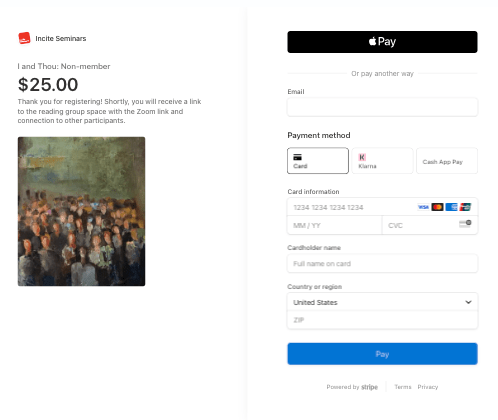
(i) $25 (all sessions) for non-members (become a member).
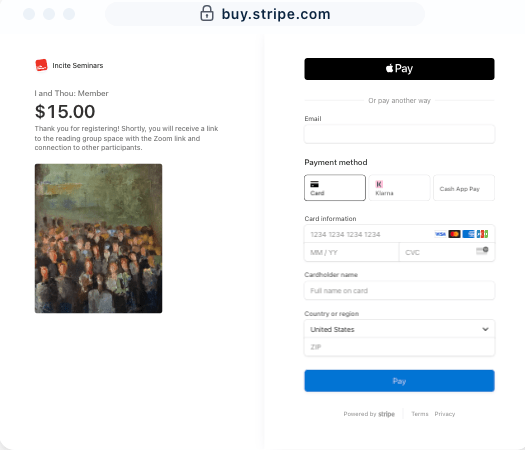
(ii) $15 (all sessions) for members.
(iii) Donation of your choice, including:
(iv) no cost solidarity ticket if you cannot afford to pay at this time (please email us requesting this option: inciteseminarsphila@gmail.com).
DESCRIPTION
Our current moment is one of excessive divisiveness. We hold in suspicion people with views that differ from ours. We increasingly enrobe ourselves in identity vestments that serve as both armor and weapon: as armor against violence real and perceived, as weapon to assert legitimacy and even moral superiority. From the halls of the American congress to the press, social media, and everyday conversation, the vitriolic language of demonization is the order of the day.
In Martin Buber’s words, we have become all-too-prone to viewing other people as objects, as things that stand apart from us. If only we can find a way to remove or drastically alter the other, then the path to personal goodness and social well-being would finally lie open for all to see! That, at least, is the logic of what Buber calls the I/it relationship. Obviously, such a perspective has potentially destructive consequences. One consequence was born out by the history in whose shadow Buber was writing, that of the Shoah. Currently, we are witnessing this potential not only in terms of political division and social discord, but in the environmental emergency, in which the unnecessary slaughter of trillions of animals-as-objects plays a major role.
Martin Buber wrote I and Thou in 1923, at a moment when the world was literally on the brink of annihilation (think: the violent, tumultuous period between the two world wars). In the 1960s, the book became massively popular when the world stood before another brink (think: the nuclear proliferation of the Cold War). Might the diagnosis of I and Thou, with its appeal to fostering interconnected I/thou relationships, offer us, in our moment of danger, resources for charting a productive way forward? This is the question we will be asking in this reading group.
Members
Non-Members (become a member)
Donation
 Incite Seminars