Between Death and Beauty:
Diving into the Post-Nihilist Poetics of René Char
a 5-session seminar with Carlos A. Segovia
📅 FIVE SATURDAYS: February 7, 14, 21, 28 & March 7, 2026
🕰️ 10 AM-12 PM Eastern US Time/16:00–18:00 Central European Time. See time zone converter if you’re in a different location.
🔗 A Zoom link will be provided on registration.
💰 Three options (registration at bottom of this page.):
(i) $100 for non-members (become a member).
(ii) $80 for members.
(iii) Solidarity. We are happy to make our offerings available at reduced or no-cost if you can not otherwise join. If you would like to request this option, please email us at inciteseminarsphila@gmail.com with the following information: (1) your current country of residence; (2) reason for requesting this option; (3) amount you can pay: $20, $40, $60 (we will send you the payment link); (4) if you are requesting no-cost, are you reasonably certain that you will attend the entire session(s)?
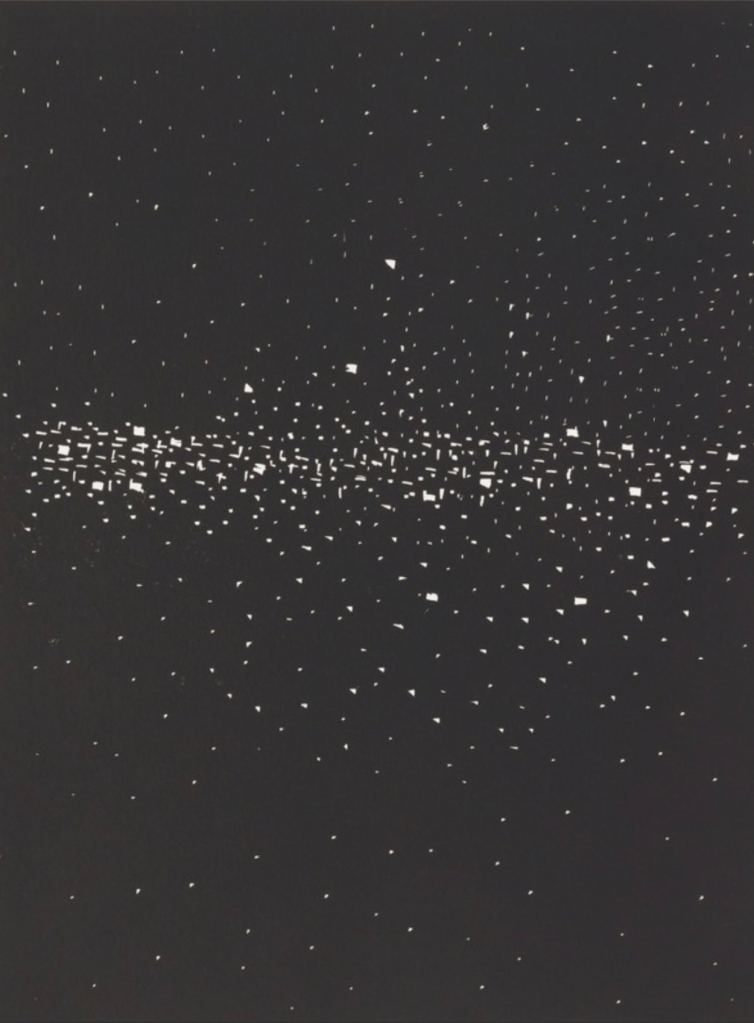
In our darkness, there is not a place for Beauty. All the space is for Beauty. —René Char, Feuillets d’Hypnos (written while fighting the Nazis; concluding aphorism)
SEMINAR DESCRIPTION
“Before shattering, everything gathers itself and comes to meet our senses. That time of preparation is our unequalled chance,” writes René Char. Poetry thus draws the world into presence before death overtakes it. Accordingly, the poet lives in a state of perpetual insomnia: a condition of sustained receptivity and ever-renewed attention.
Everything meets our senses—before dying. Char thereby affirms reality in its given form. For this reason, his poetry may be understood as post-metaphysical, insofar as it relinquishes the search for origins or unifying principles. Nonetheless, it is equally post-nihilist, as it releases reality from both transcendent grounding and totalizing coercion, yet without abandoning it to meaninglessness. For while, deprived of poetry’s sway, things often become indifferent and are shrouded in oblivion, poetry restores their original radiance—their youth—thereby healing the inevitable wounds imposed by finitude.
Moreover, poetry reconfigures—indeed, transfigures—our experience of space and time. On the one hand, it adds a third, interstitial space to the external domain of the concrete world and to the intimate realm of our imagination and feelings: a poetic space that simultaneously revivifies both. On the other hand, it extracts from time’s sands a present transversal to both past and future—a present that renders time incandescent, while affirming at once its fatal, inescapable bind.
Reclaiming himself from Heraclitus’s tragic truth, Char thus conceives of human life as unfolding within a suspended time, neither inaugural nor terminal, but perpetually poised between dawn, presence, and ruin. Against this horizon, he writes: “Poetry is both speech and silent provocation, at once desperate and demanding expectation of the arrival of an unrivalled reality. Imperishable? No, for it faces all dangers. But the only one that visibly triumphs over material death. Such is Beauty,” he goes on to say, “appearing from the earliest times of our heart, at times derisively aware, at times luminously alert.”
Consequently, while he unconditionally affirms its immanence, reality, for Char, is never merely what lies at hand before us, for us to appropriate it and manipulate. Instead, through the interweaving of feeling, insight, and labour, the poet seeks to disclose its vital depth—what Char calls “the great real.” Poetry and truth thus become synonymous: outside poetry, says Char, the world amounts to nothing, and true life takes shape only within poetry’s embrace.
Significantly, Char’s aesthetic orientation was forged—after an early, brief proximity to surrealism—through the crucible of the Second World War. He did not merely observe events from a position of ideological distance, though: he fought at the front, killing and commanding as one of the principal leaders of the French Resistance in southern France. This direct exposure to violence, risk, and irrevocable decision profoundly informed his sense of ethical responsibility. When the war ended, however, Char resolutely declined all participation in post-war political processes. For him, the most urgent task was not the management of victory, but the restoration of beauty—precisely because beauty had been the most gravely damaged. In a world scarred by organized death and moral exhaustion, beauty appeared not as ornament or consolation, but as the most wounded dimension of human experience, and thus the one most in need of renewal.
Throughout the five sessions of this seminar, we will read and study a selection of poems, aphorisms, and excerpts from several of Char’s major works, including Fureur et mystère [Fury and Mystery], Recherche de la base et du sommet[Search for the Base and the Summit], Commune présence [Shared Presence], Le Nu perdu [The Lost Nakedness], and La Parole en archipel [The Word as Archipelago]. We will also revisit Maurice Blanchot’s and Rainer Schürmann’s interpretations of Char’s poetry and thought, and engage with a short yet remarkable book composed collaboratively by Char and Albert Camus—who was and always remained one of his closest friends—together with the photographer Henriette Grindat, entitled La Postérité du soleil [The Posterity of the Sun]. Finally, we will ask how Char might best be translated into English, examining what has been accomplished thus far, as well as what may not yet have been fully achieved.
CONTENTS
Session I • February 7, 2026
0 / Prolegomena
The nakedness of the first word (Blanchot’s advocation of Char)
The pre-world and the in-between
Beauty and death
The lightning
Session II • February 14, 2026
2 / Why poets?
Poetry’s advent
Our chance, at the brink of tears
Lyre and homelessness
Earth and Pays
Session III • February 21, 2026
3 / Imaginary? Real? Both?
The place where water dances the gleam of its birth
Into the great real
From post-metaphysics to post-nihilism? (Schürmann on Char)
An alchemy without alchemy (Char and surrealism)
Session IV • February 28, 2026
4 / Magic and finitude
Dancers of the abyss, crossers…
Mortals, immortals, mortals
Time and space transfigured
An animist poetics?
Session V • March 7, 2026
5 / An experimental scholium, plus a concluding assessment
Between presence and absence: Char, Camus, Grindat… and us
Char into English: past, present, and future
FORMAT
Each session will last 120 mins. It will consist of a 15-min. introductory exposition, followed by the reading, study, and discussion of the texts selected in each case.
MATERIALS
All materials (= poems and aphorisms by Char in their French original, accompanied by at least an English version; a few photographs; and a diagram) will be supplied prior to each session.
FACILITATOR
Carlos A. Segovia (PhD) is an independent British-born, Spanish philosopher and writer, working on contemporary philosophy in relation to questions of post-nihilism and meta-conceptuality, at the crossroads of the philosophy of mythology; and author of fifteen books.
Among his recent publications, Dionysus and Apollo after Nihilism: Rethinking the Earth–World Divide (with Sofya Shaikut; Brill, 2023), Guattari Beyond Deleuze: Ontology and Modal Philosophy in Guattari’s Major Writings (Palgrave Macmillan, 2024), Félix Guattari and the Ancients: Theatrical Dialogues in Early Philosophy (with Gary Genosko; Bloomsbury, 2025), and Nietzsche’s Pre-Dionysian Apollo and the Limits of Contemporary Thought (Peter Lang, 2026). Among his forthcoming ones: The Wor(l)d in the Crucible: Poetic and Philosophical Explorations, after Zambrano and Blanchot (currently under consideration at Palgrave Macmillan).
He has been associate professor of philosophy and religious studies at St Louis University Missouri (Madrid Campus), visiting professor at the University of Aarhus and the Free University of Brussels, and guest lecturer at the European Research Council, the Collège International de Philosophie and the École Normale Supérieure in Paris, University College London, Bauhaus-Universität Weimar, Parrhesia School of Philosophy Berlin, the Catholic University of the Sacred Heart in Milan, the G & A Mamidakis Foundation in Heraklion, the European University at St Petersburg, Waseda University in Tokyo, Ryukoku University in Kyoto, and the University of Lilongwe.
Convinced, though, that higher education within mainstream academia is undergoing a form of intellectual exhaustion—brought about by academic standardization, epistemological bureaucratization, and the compartmentalization, ideologization, and commodification of knowledge, alongside the cultivation of middlebrow mediocrity and the reduction of learning to a consumer experience—he has turned to other scholarly venues in which thinking may still be pursued for what it truly is: not a means of securing conceptual control over life by adding minor exegetical footnotes to what has already been thought, but a way of confronting the unknown—the as-yet unthought but thinkable—with renewed awe.
He collaborates regularly with Incite Seminars, where he has facilitated courses like “Chaosmic Landscapes in Guattari’s Latest Works,” “Anarchia and Archai: Re-Imagining the Pre-Socratics” (with Hannes Schumacher), “Life as an Untotalizable Enigma: The Lame Ontology of Greek Mythology,” and “Plato Inside Out – or: as You Never Imagined It… with and beyond Derrida.”
He is currently based in Berlin with his life partner, Sofya Shaikut, a performative artist and butō dancer, with whom he is also engaged in ongoing joint work.
REGISTRATION
Non-members (become a member)
Members

 Incite Seminars